+8613706519013
 BHC Polymer Additives Co., Ltd / Shanghai Crystal Wells Chemical New Materials Co., Ltd.


Rubber manufacturers today face increasing pressure to improve efficiency, maintain product consistency, and create safer working environments. Traditional powdered rubber chemicals can still perform well, but they often create operational challenges such as dust generation, uneven dispersion, weighing errors, and longer mixing cycles. These issues can directly affect compound quality and production cost.
For this reason, many compounders are turning to IS60-80 pre-dispersed additives as a smarter alternative. Designed for easier handling and better incorporation into rubber compounds, IS60-80 helps optimize both processing and final product performance.
This article explains what IS60-80 is, how it works, and the 7 key advantages of using IS60-80 pre-dispersed additives in modern rubber manufacturing.

Why Rubber Manufacturers are Moving Toward Pre-dispersed Additives
In rubber compounding, the quality of additive dispersion is critical. Accelerators, vulcanizing agents, antioxidants, and other specialty chemicals must be evenly distributed throughout the compound to ensure stable curing behavior and consistent physical properties.
When using conventional powder chemicals, manufacturers often encounter several problems:
• Dust contamination in the workshop
• Material loss during feeding and transfer
• Agglomeration during mixing
• Inaccurate dosing of small quantities
• Uneven dispersion in the rubber matrix
• Variations between production batches
• Higher labor and cleaning costs
As environmental and occupational safety standards become stricter, companies are increasingly choosing pre-dispersed rubber additives that simplify handling and improve process control.
Among these solutions, IS60-80 rubber chemical masterbatch has become a practical option for many applications.
What is IS60-80 Pre-dispersed Additive?
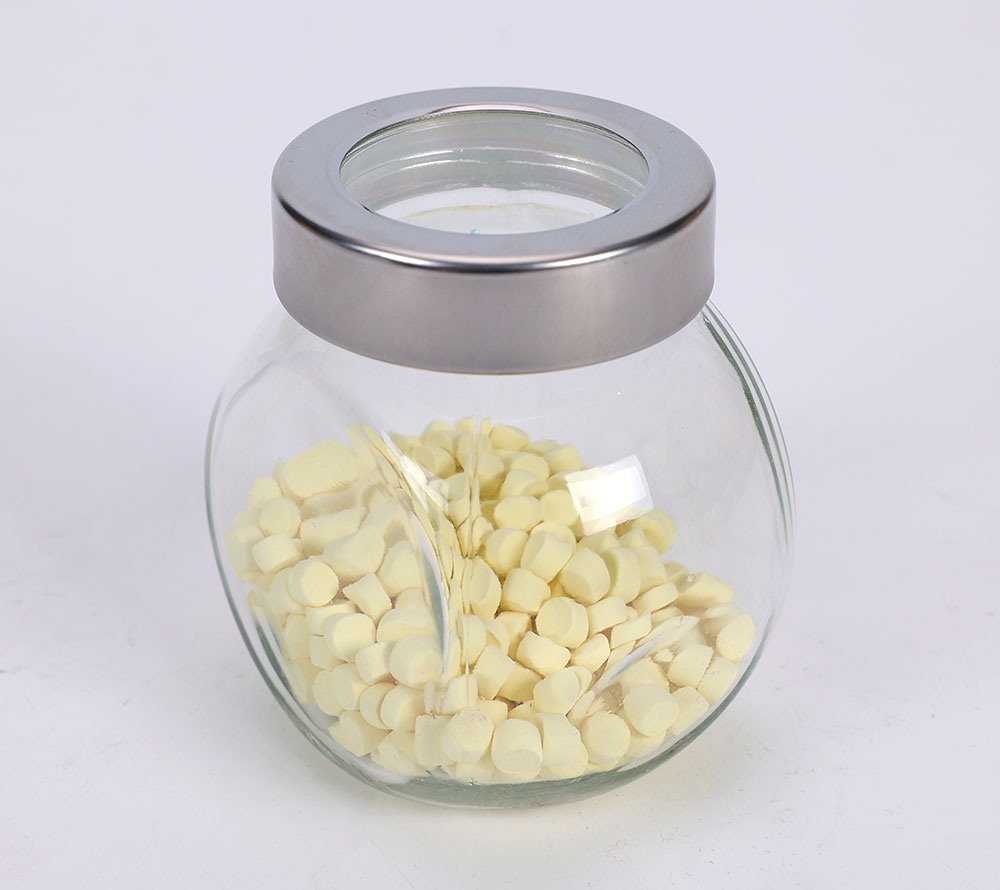
IS60-80 is a pre-dispersed rubber chemical additive in which the active ingredient is uniformly incorporated into a polymer-compatible carrier system. The number “60-80” usually indicates the approximate active content percentage, depending on product grade and formulation.
Instead of free-flowing powder, IS60-80 is commonly supplied in granule, pellet, chip, or slab form. This physical format makes it easier to weigh, transport, store, and mix into rubber compounds.
Typical characteristics of IS60-80 include:
• High active ingredient concentration
• Excellent dispersion performance
• Low dust or dust-free handling
• Good compatibility with common elastomers
• Stable processing behavior
• Improved dosing accuracy
Depending on the specific chemistry, IS60-80 may be used in compounds based on:
• Natural Rubber (NR)
• Styrene Butadiene Rubber (SBR)
• Nitrile Rubber (NBR)
• EPDM
• Butyl Rubber (IIR)
• Other synthetic elastomers
Because of these benefits, many manufacturers consider IS60-80 an efficient rubber compounding chemical for modern production lines.
7 Advantages of Using IS60-80 Pre-dispersed Additives
1. Better Dispersion in Rubber Compounds
One of the most important advantages of IS60-80 is superior dispersion.
Fine powdered chemicals can form lumps or remain partially unmixed if processing conditions are not ideal. Poor dispersion may lead to localized over-curing, weak spots, surface defects, or inconsistent mechanical properties.
IS60-80 is manufactured to distribute the active ingredient more evenly through a carrier medium. During mixing, this helps the additive break down and disperse faster within the compound.
Better dispersion can contribute to:
• More uniform cure characteristics
• Improved tensile strength and elongation
• Better surface appearance
• Reduced defect rate
• More stable product performance
For precision rubber goods, dispersion quality is especially important.
2. Dust-free and Cleaner Production Environment
Traditional powder additives can generate airborne dust during bag opening, weighing, conveying, and charging into mixers. Dust contamination creates housekeeping issues and may affect worker comfort.
By comparison, dust free rubber chemicals such as IS60-80 significantly reduce airborne particles because the active ingredient is bound in pelletized or granulated form.
This provides several benefits:
• Cleaner production floor
• Lower cleaning frequency
• Reduced contamination risk
• Better workplace hygiene
• Easier material handling
For factories focused on lean manufacturing and safety compliance, this is a major operational advantage.
3. Faster Mixing Time and Higher Productivity
Mixing efficiency directly affects production output. When powders disperse slowly, compounders may need longer rotor time or additional passes to achieve acceptable homogeneity.
IS60-80 often enters the compound more efficiently due to its pre-dispersed structure. Faster incorporation can help reduce total mixing time depending on formulation, equipment type, and loading sequence.
Potential gains include:
• Shorter batch cycles
• Increased mixer throughput
• Lower energy consumption
• Improved production scheduling
• Higher daily capacity
For large-volume manufacturers such as tire plants or hose producers, even small cycle-time savings can create substantial cost benefits.
4. More Accurate Dosing and Easier Handling
Many rubber chemicals are added in relatively small phr amounts. Minor dosing errors can alter cure rate, scorch safety, hardness, and physical properties.
Powders may cake, bridge, spill, or remain in packaging, reducing dosing precision. IS60-80 in pellet or granule form is generally easier to weigh and transfer.
This can help manufacturers achieve:
• More precise formulations
• Less operator error
• Cleaner charging process
• Lower raw material waste
• Better repeatability from batch to batch
For automated weighing systems, pre-dispersed additives are often easier to integrate than fine powders.
5. Improved Batch-to-Batch Consistency
Consistency is essential in industrial rubber production. Customers expect the same hardness, tensile strength, compression set, curing behavior, and appearance in every shipment.
Variations in additive distribution or feeding accuracy can create unstable compound performance. Because IS60-80 offers more controlled handling and better dispersion, it can help stabilize production quality.
This is especially valuable for:
• Automotive rubber parts
• Seals and gaskets
• Conveyor belts
• Medical or technical rubber goods
• Export products requiring tight specifications
Using IS60-80 pre-dispersed additives can reduce rework, scrap, and customer complaints caused by inconsistency.
6. Safer for Workers
Occupational safety is a growing concern across manufacturing industries. Repeated exposure to airborne chemical dust may create respiratory discomfort or require additional control measures.
Although all chemicals must be handled according to safety data sheet instructions, pelletized or pre-dispersed forms generally reduce dust exposure during routine operations.
This can support safer workplaces through:
• Lower airborne particulate generation
• Reduced manual cleanup
• Cleaner storage areas
• Simpler handling procedures
Combined with proper ventilation, PPE, and training, IS60-80 can become part of a stronger factory safety program.
7. Lower Overall Production Cost
Some buyers focus only on unit price per kilogram. However, total manufacturing cost depends on much more than raw material price.
IS60-80 may help lower overall cost through:
• Reduced waste and spillage
• Lower scrap rates
• Faster production cycles
• Less cleaning labor
• More stable quality output
• Reduced downtime from mixing issues
When evaluated on total cost of ownership rather than purchase price alone, pre-dispersed rubber additives often deliver strong economic value.